At a recent meeting of Largs Probus Club, Sandy McWhirter gave a very interesting talk on Bletchley Park and the role the cryptanalysts there played in cracking the German Enigma code. He advised that the Enigma machine was an electromechanical encryption device developed in the early 1920s by Arthur Scherbius. It used rotating rotors, wiring, and a plugboard to scramble letters which produced a vast number of possible cipher combinations.
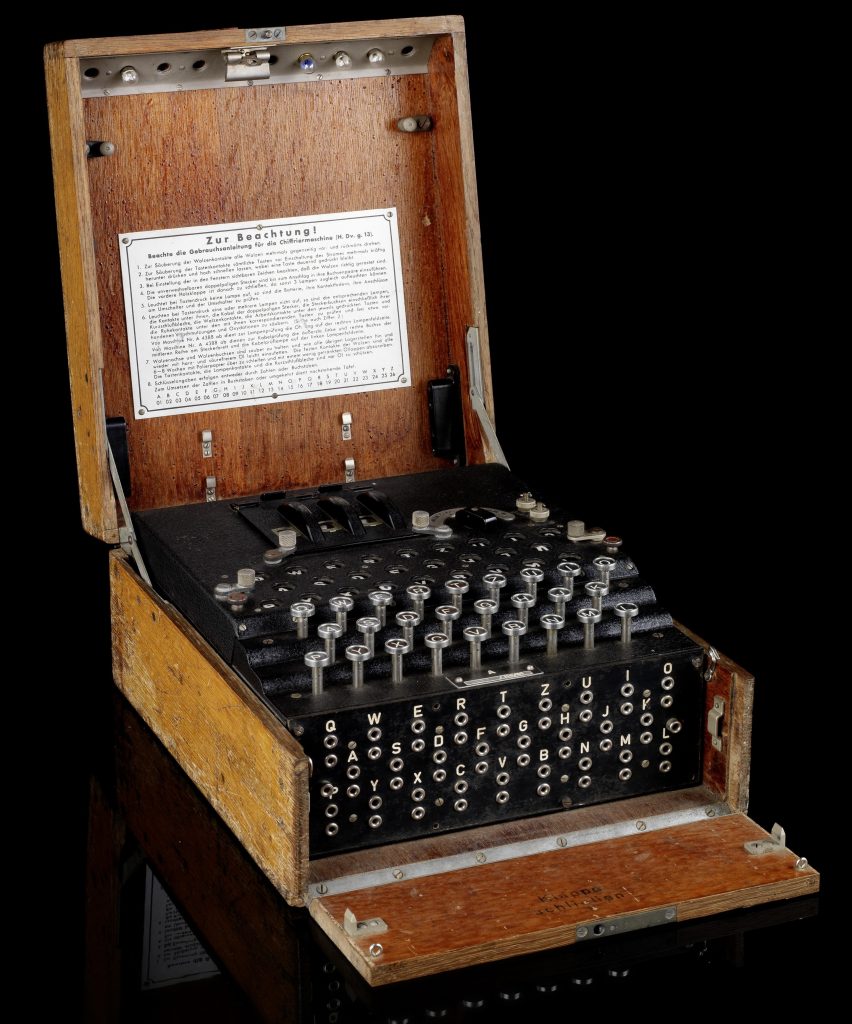
Nazi Germany adopted Enigma for military communications in the 1930s, believing it to be unbreakable.
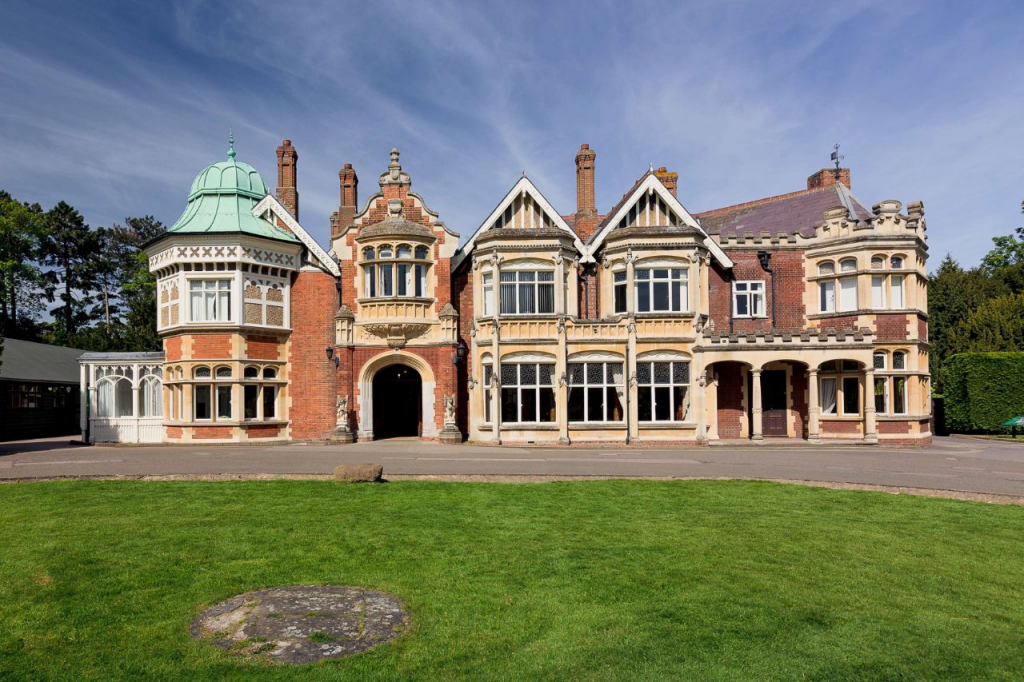
Bletchley Park
Sandy spoke on the work of Polish cryptanalysts Marian Rejewski, Jerzy Różycki, and Henryk Zygalski who, before World War 2, had reverse-engineered the machine and developed early techniques and devices to decipher its messages.
They were well ahead of British intelligence, but this changed in 1939 when they shared their work with British and French intelligence.
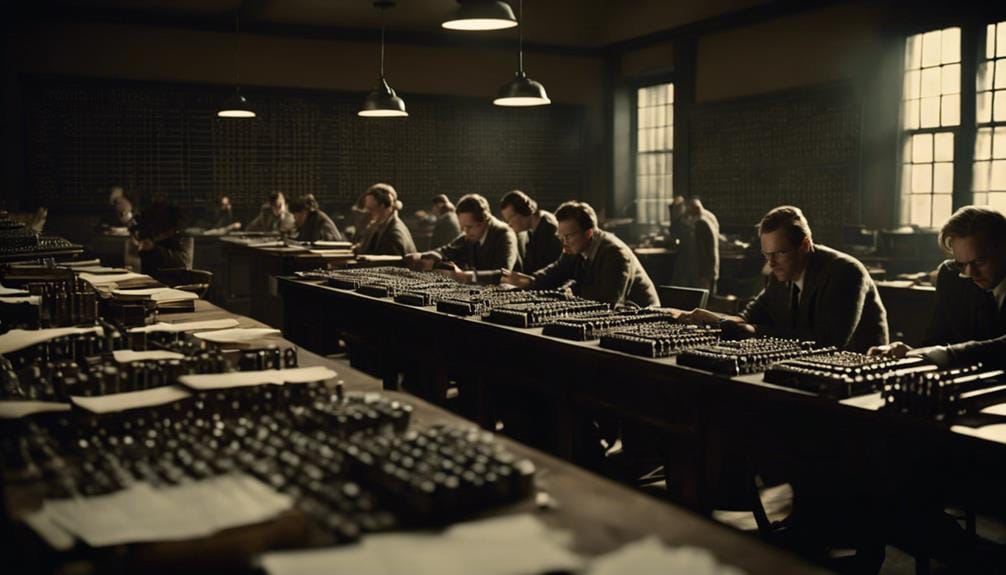
Bletchley Park was established with purpose-built facilities and operations to decode enemy communications and provide crucial wartime intelligence. It relied on a large, diverse workforce numbering at its peak some 9,000 people including cryptanalysts, linguists, mathematicians, engineers, clerks, and military personnel, a large proportion were women from services such as the Women’s Royal Naval Service, the Auxiliary Territorial Service, and the Women’s Auxiliary Air Force. The site had accommodation, canteens, and administrative services to support the large workforce working in 24-hour shifts.
British cryptanalysts expanded the methods used by the Polish cryptanalysts with Alan Turing and Gordon Welchman designing the Bombe, which rapidly tested rotor settings using likely plaintext guesses (“cribs”). The bombe was an electro-mechanical device used by British cryptologists to help decipher German Enigma-machine-encrypted secret messages during World War II. By exploiting procedural weaknesses and patterns in German communications, of which there were many as the Germans continued to believe Enigma to be unbreakable, the team could regularly determine daily Enigma keys. The resulting intelligence, known as “Ultra,” was sent to military leaders to guide operations, this gave the Allies crucial insight into German plans and is widely believed to have shortened the war by several years.
Morrison Sutherland gave the vote of thanks for a thoroughly entertaining presentation and referred to a visit he had made to Bletchley Park when we was shown a demonstration of the Bombe in operation.
Why not join us at our next meeting?
New members are always welcomed at the Club. If you are 50 or over, retired, or nearing retirement, (men only, I’m afraid, sorry ladies) you can attend three meetings as a guest and find out what a relaxed and friendly time we have. That’s plenty of time to decide whether to become a Club member or not. Please check out our programme and fill in our Contact Form if you wish to attend as a guest, or to enquire about joining.
Largs Probus Club will next meet in the Willowbank Hotel on Wednesday 18th March at 10am when Drew Cochrane will give a talk on Confessions of an Editor (Part 2). See our blog for Part 1.